

3 Ways for Couples to Strengthen Their Communication: Couples Therapy & Marriage Counselling in Langley, Fort Langley, and the Fraser Valley in BC

Updated: May 12
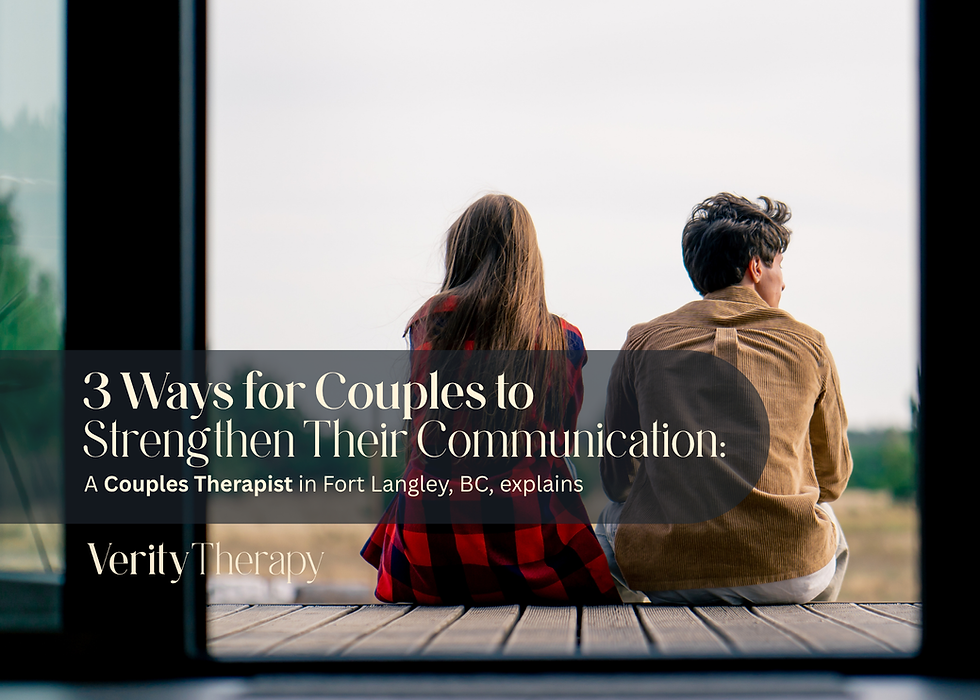
Couples Therapy in Langley, BC
Have you ever found yourself thinking, "We love each other, but why does it feel so hard to stay close?" Every couple experiences moments or seasons where feeling connected becomes harder to hold onto. When distance builds from minor disagreements, or when romance becomes colder and strained. I'm so sorry if this is you right now. All you want is what you used to have: warmth, tenderness, laughter, security, and connectedness with your spouse.
The truth is, friendship is the heartbeat of a lasting relationship. As Dr. John Gottman
points out, couples who invest in their friendship have more humor, affection, and
resilience to weather conflict. The hopeful part? Even small shifts in how you communicate can make a big difference — and if you're a couple in Langley or Fort Langley looking for practical marriage help, I would be so happy to meet with you. In the
meantime, these three communication practices are a wonderful place to start. They are
my favourite.
One: Respond to Bids for Connection
A "bid for connection" is any small way your partner tries to get your attention in order to connect. This could look like asking a question, sharing a thought, or even pointing out something as simple as a bird outside the window. While it may not seem important, or their bid feels far from warm or kind, responding with interest and warmth tells your partner, "You matter to me" and addresses the yearning underneath the action.
Missed bids can slowly create distance. That's why paying attention to these little moments is key. Try putting down your phone, making eye contact, and asking a curious question in response. The idea is to turn toward, rather than away. I also encourage couples to be mindful of what their "turning toward" feels like to the other person. Connection requires our attention, softness, receptivity, and interest. Genuinity is felt and makes a difference! And the beautiful thing is that small moments of presence and interest accumulate into feelings of trust and closeness.
This is one of the foundational skills I work on with couples in my Langley counselling
practice - because it's simple, but it changes everything.
Two: Own Your Feelings
The way we express ourselves can either open the door to connection or shut it down.
Criticism often sounds like "You never…" or "You always…," which naturally invites
defensiveness. Emotions are meant to give us and those around us information,
however we get to decide how we communicate our feelings. By intentionally sharing
how we are feeling and how we can be helped, we let our partners into our world, giving
them a chance to repair and change course.
Instead, try speaking from your own experience:
"Sometimes when we talk, I feel unheard and invisible. What will help me feel loved and
connected to you is if you can help me know that you hear me by sharing what you
heard me say before you respond."
This kind of language is softer, more specific, and makes it easier for your partner to
know how to respond. Ownership communicates vulnerability rather than blame, and
that's what creates space for change. In couples therapy, learning to speak this way is
often one of the most transformative shifts I witness.
Three: Bridge the Gap
Conflict and separation are part of every relationship. What matters is how you navigate
them. As Dr. Gordon Neufeld says (paraphrased), the goal is to experience
togetherness without losing your individuality — and separateness without losing your
bond.
When tensions rise, it helps to send the message: "I care, and I'm coming back." For
example:
• "I'm upset and need a break, and I love you and want to finish this later."
• "This feels hard right now, and I also know we'll get through it."
When you're trying to bridge, even small language choices matter. For example, notice
the difference between saying "I love you, but this is really hard" versus "This is really
hard, and I love you." That one word shift communicates that both realities can exist at
the same time: you're hurt, and you care. Using "and" helps your partner hear your
layered feelings and see that you're still open to resolving the tension together.
Even outside of arguments, you can "bridge" by offering reassurance before everyday
separations. Try: "I'm looking forward to catching up tonight" or "Can't wait to hear how
your meeting goes." However, the more specific the better! This way of communicating
can build safety and connection over time. Many couples I work with in Fort Langley and
the surrounding Langley area find that this one shift alone begins to rebuild a sense of
security in their relationship.
In Closing…
Healthy communication doesn't mean never fighting; it really means staying connected
in the midst of conflict. Responding to bids for connection, owning your feelings, and
bridging separations are three simple but powerful practices that can help you feel
closer and more secure with your partner.
If you're in Langley, Fort Langley, or the Fraser Valley and these practices feel hard to
implement on your own, couples counselling might be the support you and your partner
need. Whether you're navigating ongoing conflict, emotional distance, or simply want to
grow closer, marriage counselling offers a safe, guided space to do that work together.
If you're curious about whether couples therapy in Langley, BC could be healing for you, please reach out — it would be my joy to connect with you. I welcome you to book a free 15-minute
phone consultation so we can figure out if I'm a good fit for your needs.

Sharaya Wollf
MA, MFT, RCC


Comments